Aswan: Jewel of the Nile
Nestled along the banks of the majestic Nile River, Aswan stands as one of Egypt's most captivating destinations, where ancient history meets breathtaking natural beauty. This enchanting city in southern Egypt has charmed travelers for millennia with its golden sand dunes, vibrant Nubian culture, and remarkable archaeological treasures that tell the story of civilizations past.
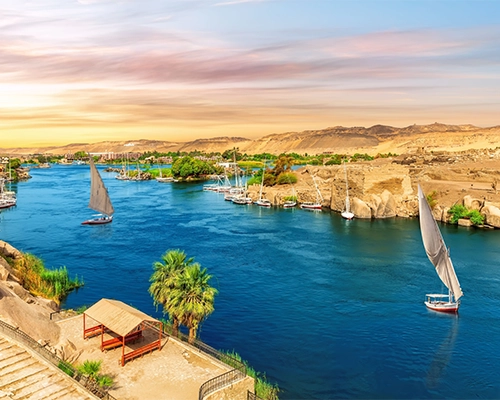
Unlike the bustling energy of Cairo or the monumental grandeur of Luxor, Aswan offers a more relaxed and intimate Egyptian experience. Here, feluccas glide gracefully across the Nile's azure waters while palm trees sway gently in the desert breeze.
This city also serves as the gateway to some of Egypt's most spectacular temples, including Abu Simbel, and offers easy access to less visited archaeological sites that provide intimate encounters with ancient history.

Where Is Aswan?
Aswan sits approximately 550 miles south of Cairo, positioned strategically at the first cataract of the Nile River. This natural barrier of granite rocks and rapids historically marked the southern border of ancient Egypt and served as a gateway to Nubia and the broader African continent. The city lies at the intersection of the Sahara Desert and the fertile Nile Valley, creating a dramatic landscape where golden sand dunes meet lush riverbanks dotted with date palms and tropical vegetation.
The Nile here is at its most beautiful, flowing around emerald islands covered in palm groves and Nubian villages painted in bright blues and yellows. The desert hills rise dramatically from the river's edge, their rocky outcrops hiding ancient quarries and tombs that have witnessed thousands of years of history.
Top Attractions in Aswan
Philae Temple
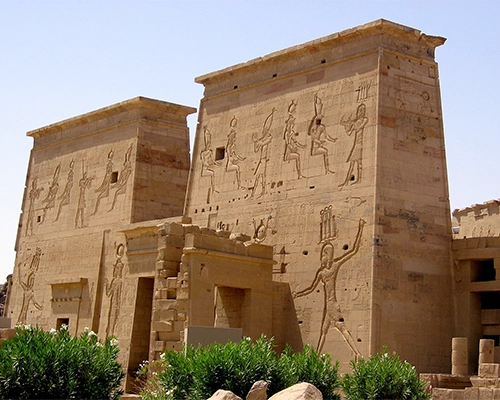
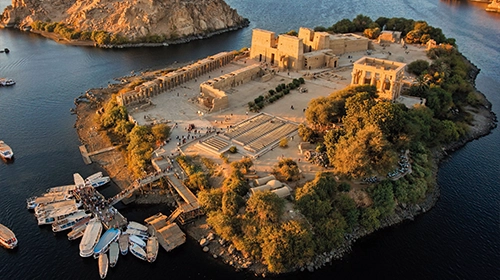
The Temple of Philae stands as one of Egypt's most romantic and beautifully preserved temple complexes, dedicated primarily to the goddess Isis. This remarkable site represents one of archaeology's greatest rescue missions—when the construction of the High Dam threatened to permanently submerge the temple, UNESCO coordinated an incredible effort to relocate the entire complex stone by stone to nearby Agilkia Island.
The temple's journey began in ancient times when it served as a major pilgrimage destination for worshippers of Isis from across the Mediterranean world. The complex features several structures, including the main temple with its stunning hypostyle hall, the elegant Kiosk of Trajan, and various smaller chapels and pylons decorated with intricate hieroglyphic inscriptions and colorful reliefs.
Visiting Philae requires a short boat ride across the reservoir waters, adding to the sense of adventure and isolation that makes this site so special. The temple is particularly magical during the evening sound and light show, when the ancient stones are illuminated against the star-filled desert sky while narrators bring the stories of Isis and Osiris to life.
The High Dam
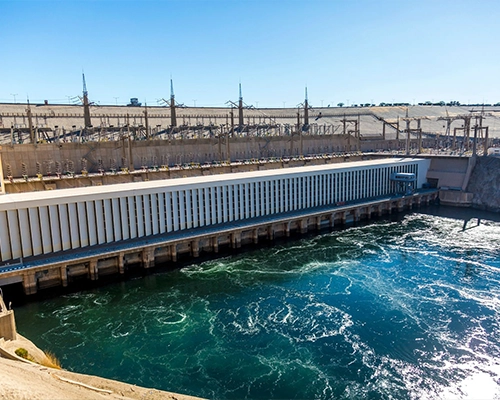
The Aswan High Dam represents one of the 20th century's most ambitious engineering achievements, forever changing the landscape of the Nile Valley and modern Egypt's development path. Completed in 1970, this massive structure stretches 2.3 miles across the Nile and rises 364 feet above the riverbed, creating Lake Nasser, one of the world's largest artificial lakes.
The dam's construction required moving entire communities and archaeological sites, most famously Abu Simbel, in an unprecedented international preservation effort. Beyond its engineering significance, the High Dam provides crucial flood control, ensures year round water supply for irrigation, and generates a substantial portion of Egypt's electricity through its hydroelectric power station.
The views from the top of the dam are spectacular, offering panoramas of Lake Nasser stretching endlessly southward and the Nile continuing its ancient journey northward through the Egyptian landscape.
Unfinished Obelisk
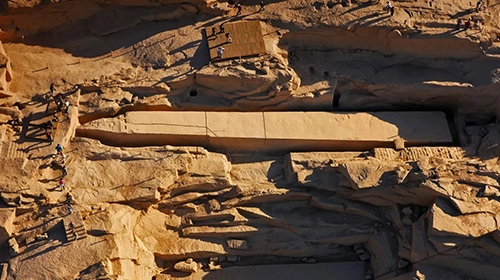
The Northern Quarries of Aswan contain one of archaeology's most fascinating mysteries—an enormous obelisk that was abandoned during its construction over 3,000 years ago. This massive monument, if completed, would have been the largest obelisk ever erected, standing 137 feet tall and weighing approximately 1,200 tons.
The unfinished obelisk provides invaluable insights into ancient Egyptian stone working techniques.The unfinished obelisk provides invaluable insights into ancient Egyptian stone working techniques.
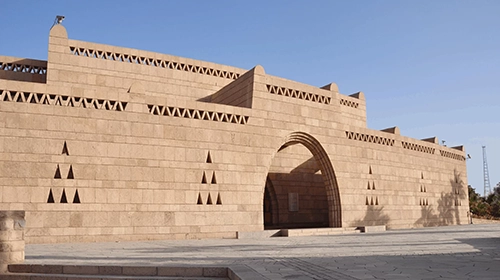
Nubian Museum
The Nubian Museum stands as a world class institution dedicated to preserving and presenting the rich heritage of Nubian civilization, much of which was threatened by the construction of the High Dam. The museum's striking modern architecture, inspired by traditional Nubian building techniques, houses an exceptional collection of artifacts spanning over 5,000 years of Nubian history.
The museum also serves as an important cultural center, hosting exhibitions of contemporary Nubian art and providing educational programs that help preserve Nubian languages and traditions for future generations.
Elephantine Island
The island contains the ruins of ancient temples dedicated to Khnum, the ram headed god associated with the Nile's annual flood, as well as residential areas that show how ordinary Egyptians lived during various historical periods. The site's museum displays artifacts discovered during ongoing excavations, including the famous Elephantine Papyri, which provide crucial information about daily life in ancient Egypt.
Botanical Gardens (Kitchener Island)
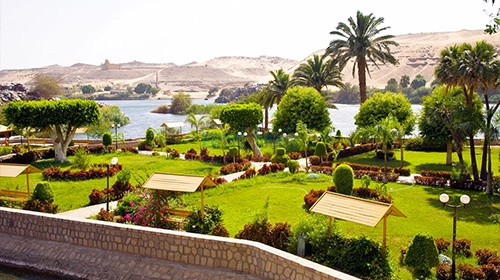
Kitchener Island, also known as the Island of Plants, houses Aswan's remarkable Botanical Gardens, created by Lord Kitchener during his time as Consul General of Egypt in the early 20th century. This 17 acre island paradise contains one of Egypt's most important collections of tropical and subtropical plants from around the world.

Best Time to Visit Aswan
Aswan enjoys a desert climate with minimal rainfall throughout the year. The ideal time to visit Aswan is during the cooler months from October through March, when daytime temperatures hover between 70-80°F (20-25°C) and evenings become pleasantly cool.
December through February represents peak tourist season, offering the most comfortable weather conditions but also the largest crowds and highest prices. November and March provide an excellent balance of favorable weather and fewer tourists, making these months particularly attractive for travelers seeking a more authentic experience
Summer months from May through September can be extremely challenging, with temperatures regularly exceeding 100°F (40°C) during the day. However, some adventurous travelers prefer this period for significantly lower prices and virtually empty attractions, though outdoor activities should be limited to early morning or late afternoon hours.